General William Hull Court-Martial: 1814
An Army Of State Militiamen And Inexperienced Officers
When the War of 1812 began, the army consisted of only 6,750 officers and men. There were between 500,000 and 700,000 state militiamen who could be called into federal service, but most of them were untrained, unorganized, and unarmed and many refused to fight beyond their own state's borders. Furthermore, most officers in both the regular army and the militias had little training or experience and owed their jobs to political influence rather than to any skill or merit.
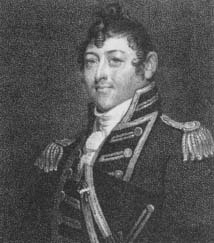 General William Hull, engraving by David Hull after a painting by Gilbert Stuart.
One of the army's politician-officers was William Hull. Revolutionary War hero, lawyer, Massachusetts legislator, state judge, and a major general in the Bay State's militia, he was appointed governor of the Michigan Territory in 1805. (In 1810, Michigan had a population, not counting the Indians, of only 4,762, about 800 of whom resided in the village near Fort Detroit. The military garrison at the fort, the largest in the territory, had 94 men.) As war clouds loomed, Hull sought a military command even though he was 58 years old and had not seen combat in more than 25 years. Still, he had more experience than most of the men who would be his superior officers. In April 1812, he was commissioned a brigadier general and was placed in command of what was called the North Western Army.
In anticipation of hostilities, Hull's orders were to muster his army at Urbana, Ohio, move north to Detroit, and then await further instructions. His force consisted of 1,200 Ohio militiamen and 800 regular soldiers from the Fourth U.S. Infantry. Immediately, there was bickering between the regular soldiers and the militiamen, a mutiny by some Ohioans who refused to leave Urbana until they got paid, and a lack of cooperation (if not downright insubordination) from the three Ohio militia colonels.
Additional topics
Law Library - American Law and Legal InformationNotable Trials and Court Cases - 1637 to 1832General William Hull Court-Martial: 1814 - An Army Of State Militiamen And Inexperienced Officers, Hull Ordered To Invade Canada, Hull Viewed As A Coward