Samuel Chase Impeachment: 1805
Congress Impeaches Chase
After Marbury, Jefferson adopted a different tactic in attacking the Federalist judiciary. He decided to exploit his party's domination of the Senate, where 25 of the 34 senators were Democratic-Republicans and only nine were Federalists. Under Article II, Section 4 of the Constitution, federal judges can be impeached for "High Crimes and Misdemeanors," and under Article I, Section 3, the trial must be conducted before the Senate. Jefferson's allies in the House of Representatives passed Articles of Impeachment against Chase, which were duly received by the Senate.
The Senate's High Court of Impeachment, presided over by Vice President Aaron Burr, opened on February 4, 1805. The "trial managers," or prosecutors, were John Randolph and Caesar Rodney. Chase's lawyers were Robert Goodloe Harper, Joseph Hopkinson,
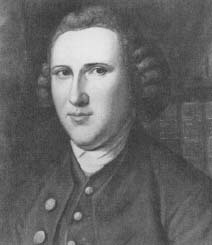 Painting of Samuel Chase
There was certainly plenty of evidence that Chase was a highly opinionated Federalist judge, who had perhaps acted with little regard for courtroom niceties, but there was very little proof that his actions were serious enough to be deemed constitutional violations. Even the Democratic-Republican senators felt uncomfortable. Trial manager Rodney in his closing argument lamely begged the Senate:
Remember, if this honorable court acquit the defendant, they declare in the most solemn manner … that he has … behaved himself well, in a manner becoming the character of a judge worthy of his situation.
On March 1, 1805, the Senate voted on Chase's impeachment. On each of the eight Articles, enough Democratic-Republican senators joined the Federalists in voting "not guilty" so that Chase was acquitted of all the charges against him. Chase continued to serve on the Supreme Court until he died in June 1811.
Samuel Chase's acquittal was a defeat for Thomas Jefferson, who may have planned to impeach Chief Justice John Marshall if Chase had been found guilty. The Samuel Chase impeachment was the first and only time Congress impeached a justice of the U.S. Supreme Court.
—Stephen G. Christianson
Suggestions for Further Reading
Elsmere, Jane Shaffer. Justice Samuel Chase. Muncie, Ind.: Janevar Publishing, 1980.
Haw, James. Stormy Patriot: the Life of Samuel Chase. Baltimore: Maryland Historical Society, 1980.
Rehnquist, William H. Grand Inquests: the Historic Impeachments of Justice Samuel Chase and President Andrer Johnson. New York: William Morrow & Co., 1992.
Additional topics
Law Library - American Law and Legal InformationNotable Trials and Court Cases - 1637 to 1832Samuel Chase Impeachment: 1805 - Congress Impeaches Chase